Most people can spot a dead tree. The leaves are gone, the branches look brittle, and the tree simply doesn’t look healthy anymore. What many property owners don’t realize is how quickly a dead tree can become a safety concern.
A dead tree doesn’t always fall right away. In fact, some remain standing for years. The problem is that once a tree dies, its condition continues to worsen over time. The longer it remains, the greater the risk it may pose to people, property, and nearby structures.
If you have a dead or declining tree on your property in Omaha or the surrounding area, here are a few things worth knowing.
Why Dead Trees Become Unstable
Living trees are constantly adapting to weather, wind, and seasonal changes. A dead tree loses that ability.
As the tree dries out, branches become brittle and the wood begins to weaken. The root system may also start to deteriorate, reducing the tree’s ability to remain stable during storms and high winds.
Over time, even a tree that appears solid from a distance may develop serious structural weaknesses.
Not All Dead Trees Look the Same
Some dead trees are obvious. Others can be surprisingly difficult to identify.
A tree may still have some leaves while large sections are no longer healthy. Other times, only the upper portion of the tree is declining while the lower trunk appears normal.
Signs a tree may be dead or dying include:
- Large sections without leaves during the growing season
- Dead branches throughout the canopy
- Peeling or missing bark
- Visible decay
- Fungal growth near the base
- Excessive limb loss
If you’re unsure, it is often worth having the tree evaluated before problems develop.
Falling Limbs Are Often the First Warning
One of the most common issues with dead trees is falling branches.
A branch that weighs several hundred pounds doesn’t need a storm to come down. Dead limbs can fail during calm weather, especially as decay progresses.
Property owners often notice:
- Branches falling unexpectedly
- Cracking sounds during windy conditions
- Limbs hanging after storms
- Increased debris around the base of the tree
Many tree removal projects start after a homeowner experiences a close call with a falling branch.
Storms Can Turn a Manageable Problem Into an Emergency
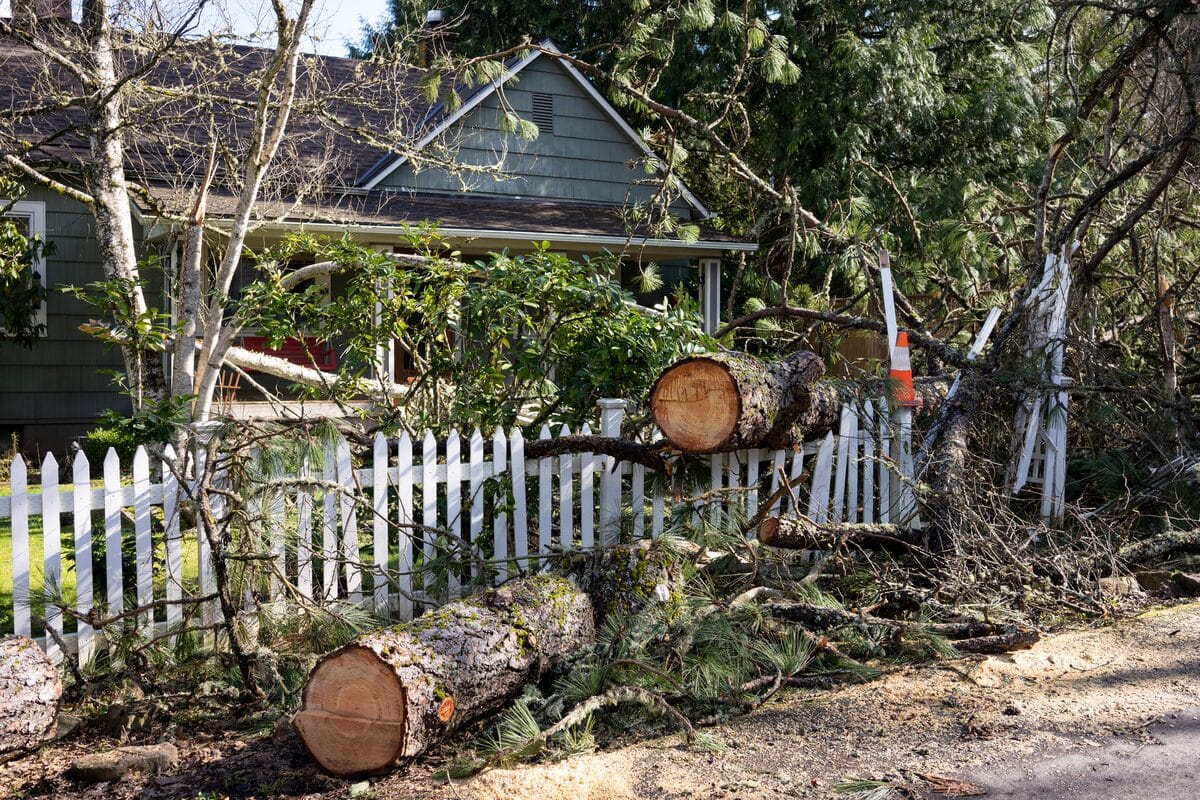
A dead tree that appears stable on a sunny afternoon can become a completely different situation during severe weather.
Strong winds place tremendous stress on weakened trunks and branches. Ice and heavy snow can add additional weight. Once structural weaknesses exist, storms often expose them quickly.
Around Omaha, Bellevue, Papillion, Elkhorn, and Ralston, many emergency tree removals happen after weather events that push already weakened trees past their limit.
Location Matters
A dead tree in the middle of a large open field presents a different level of risk than one located next to a house.
The closer a dead tree is to people, vehicles, structures, or utility lines, the more important it becomes to address the situation before failure occurs.
Trees near these areas deserve particular attention:
- Homes
- Garages
- Driveways
- Sidewalks
- Commercial buildings
- Parking lots
- Utility lines
The potential cost of damage often exceeds the cost of proactive removal.
Should Every Dead Tree Be Removed?
Not necessarily.
In some situations, dead trees located away from structures may be left standing for wildlife purposes. However, when a dead tree poses a potential threat to people or property, removal is often the safest option.
Every situation is different. Factors such as tree size, condition, location, and surrounding structures all play a role in determining the best course of action.
Don’t Ignore the Warning Signs
Dead trees rarely improve with time. More often, they continue to decline until weather or gravity makes the decision for you.
If you’ve noticed a tree on your property showing signs of decline, it’s worth addressing the issue before it becomes an emergency. A professional evaluation can help determine whether trimming, monitoring, or removal is the best solution.
You can learn more about our Tree Removal Services and how we help property owners throughout Omaha and surrounding communities safely remove hazardous and unwanted trees.
Concerned About a Dead Tree?
Steel Blue Landscape & Tree Services provides professional tree removal services for residential and commercial properties throughout Omaha, Elkhorn, Bellevue, Papillion, Ralston, and nearby areas.
If you have concerns about a dead, damaged, or hazardous tree, contact us today to request an estimate. We’ll help you evaluate the situation and determine the safest path forward.


